


Nottingham’s cheese scene is a real treat – and it is now even more so with the addition of Primrose Creamery at the Welbeck Estate.
We speak to founder and cheesemaker Jake Goldstein about starting up the business, crafting quality cheeses, and what his first year has been like, including winning Great Taste Awards stars and Golden Forks.
If you love trying different food in Nottingham, Primrose Creamery’s range is worth checking out. For more features like this, subscribe to The Notts Edit to receive our articles in your inbox for free.
‘You’ve got to have a certain mindset to be a cheesemaker’ — Jake Goldstein’s Primrose Creamery is making the best cheese in the country in Nottinghamshire
By Eve Smallman
Photos by Primrose Creamery
If there’s one food that can bring people together, it has to be a gorgeous cheese. Whether shared on a board or simply nibbled out of the fridge, it really is a thing of beauty. At the Welbeck Estate, there is a very exciting new wave of cheese being made. Two of them already have three Great Taste Award stars each – and one of them is even the best product in England.
Primrose Creamery is masterminded by Jake Goldstein, who set it up in October 2025. ‘I love feeding people – I love cooking for friends and family and, without wanting to over-romanticise it or seem too cliched, knowing that someone is just sat around a dinner table with their family enjoying our cheeses, when we get that feedback directly from customers, or even just see them enjoying it… That is the most satisfying part of the job,’ he explains.
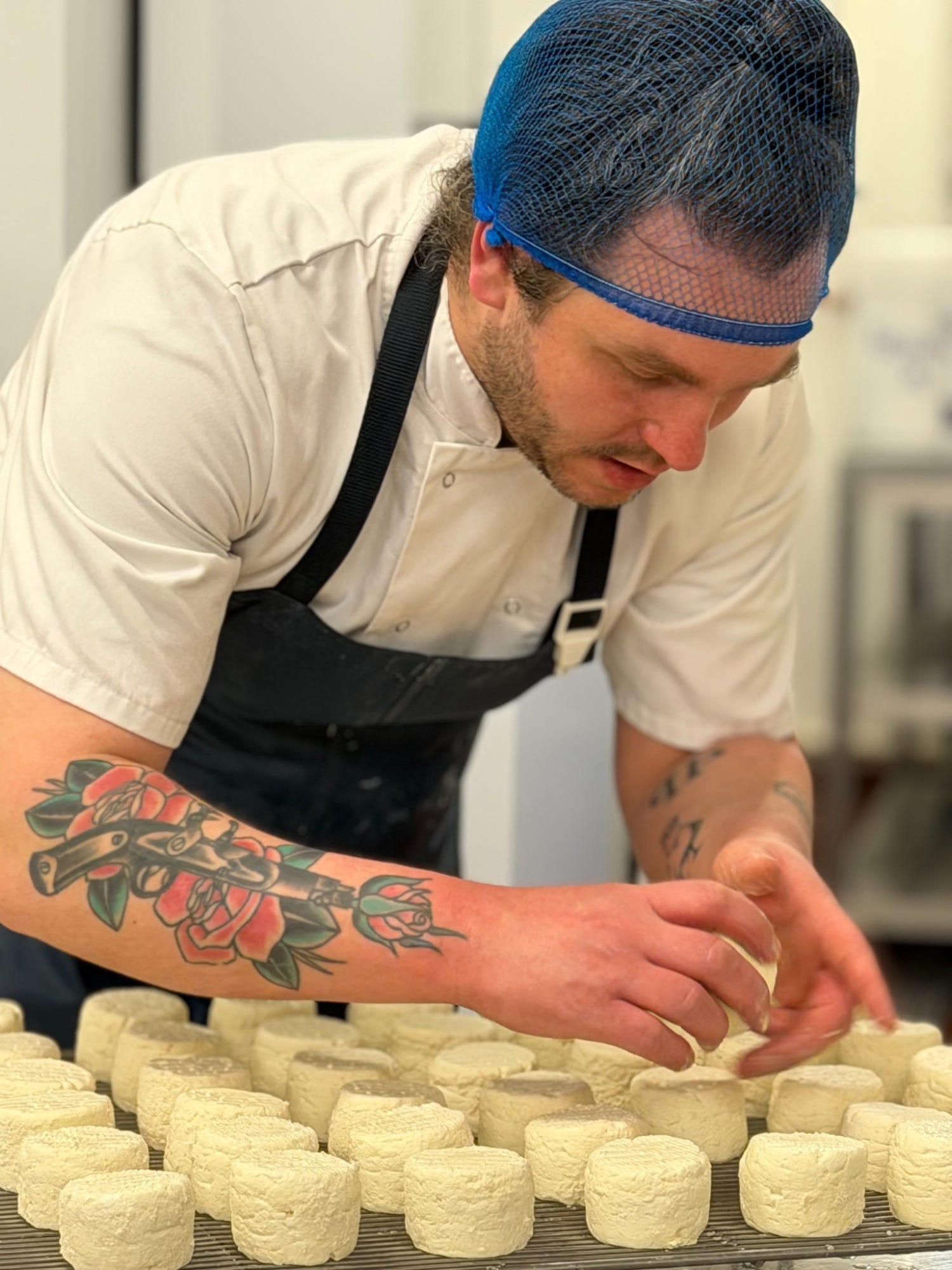
Before opening the creamery, Jake ran cocktail bars in Brighton for 12 years, which specialised in simple but seasonal ingredients. When COVID hit, they had to shut down and move into his mum’s summerhouse – and he decided it was time to change careers. ‘I couldn’t be bothered to stay up until three o’clock in the morning anymore – I wanted to do something that was related to food and drink and something that excited me.’
After looking at butchery briefly, he decided to look at cheesemaking – and after reading a few books, he did an Academy of Cheese course. From here, he moved to Herefordshire for family reasons, and emailed local cheesemakers. He started off at Monkland Cheesemakers, making hard cheddar and blue softs. After this, he worked at Neal’s Yard Creamery, which makes similar style cheeses to what Jake makes today. ‘They were predominantly goat cheeses, but they were fresh, lactic set cheeses,’ he explains.
Soon enough, an opportunity came around at the School of Artisan Food at the Welbeck Estate – which came at a useful time for Jake, with him wanting to build something of his own. ‘They historically taught a cheese-making diploma out of the school, but there wasn’t as much demand for it – so they said, “Why don’t you lease it, and then you can come in?”’ Jake explains. This meant that the school could have a cheesemaker on site, and he could become the dairy tutor for the school. ‘It’s all more symbiotic and integrated – we have lunch together, and getting school lunches is definitely a bonus.’
He continues, ‘I’ve got quite a unique opportunity here to be in a space that is surrounded by like-minded foodie people.’ For example, when testing the new butter, Jake went out and handed it out to everyone with feedback forms. ‘I don’t think I would have gotten the same level of feedback if I was handing it out to a bunch of plumbers,’ he laughs.
Working at the Welbeck Estate, Jake is neighbours with Stichelton Dairy, which produces a raw unpasteurised blue cheese. ‘I was moaning to Joe [Schneider] and said we were trying to sort teething problems, and he said they’re just regular problems forever,’ he says. ‘You’ve got to have a certain mindset to be a cheesemaker, because you’re always going to encounter curveballs and variables that you can’t control – so we just try and control the ones that we can.’
Raw milk changes all the time based on the seasons and seasons based on where you are, so it’s important to be reactive with it, such as how active the milk is, how long it takes to set the curd, and what temperatures and humidity are being used. ‘I come from a food and drink background, and you always talk about quality and consistency, quality and consistency – but when you start making cheese, everyone’s like, “Quality, sure – consistency, eh, not so much,” – and that’s quite a hard pill to swallow when you want to control it and make it as good as you can,’ Jake explains. ‘I had to learn to find beauty in the variation and lean into it a little bit.’
Being on the estate also shapes the way the cheese tastes. Jake says they have been incredibly lucky to come into a farm used to making high quality milk specifically for raw milk cheese, with Stichelton being established for over 20 years. ‘There’s also its own microclimate – possibly more relevant to hard cheeses – with your native moulds in the air,’ he continues. ‘But that sense of terra, that sense of place – isn’t just transferable. I could make the cheese here and age it over in someone else’s maturing room in Derbyshire or whatever, and it would result in different cheese. That’s not necessarily the temperature or the humidity – it is literally the fact that the air is physically different.’
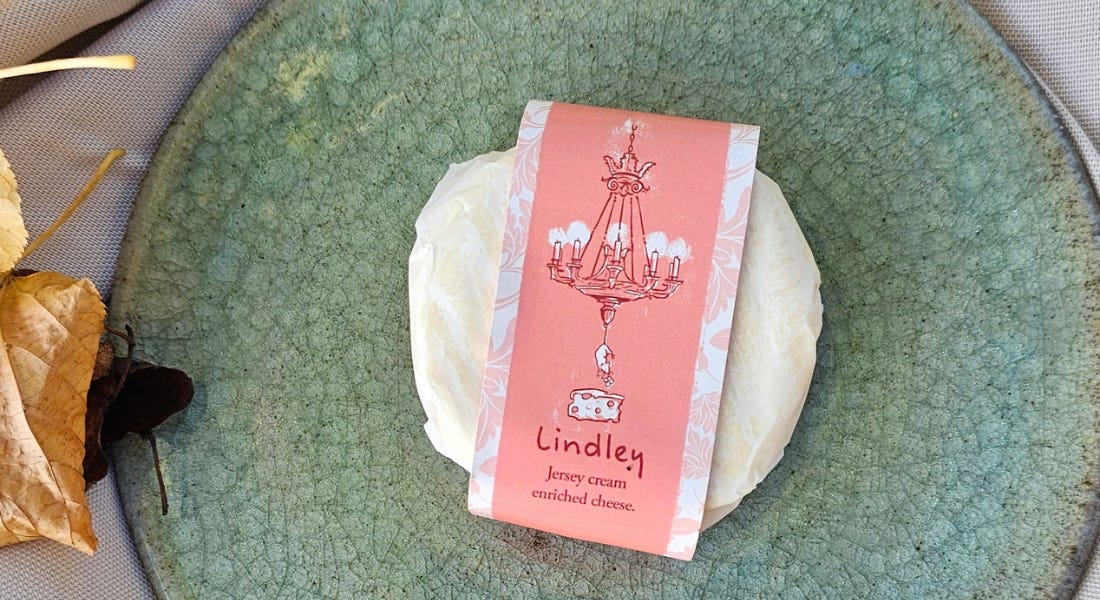
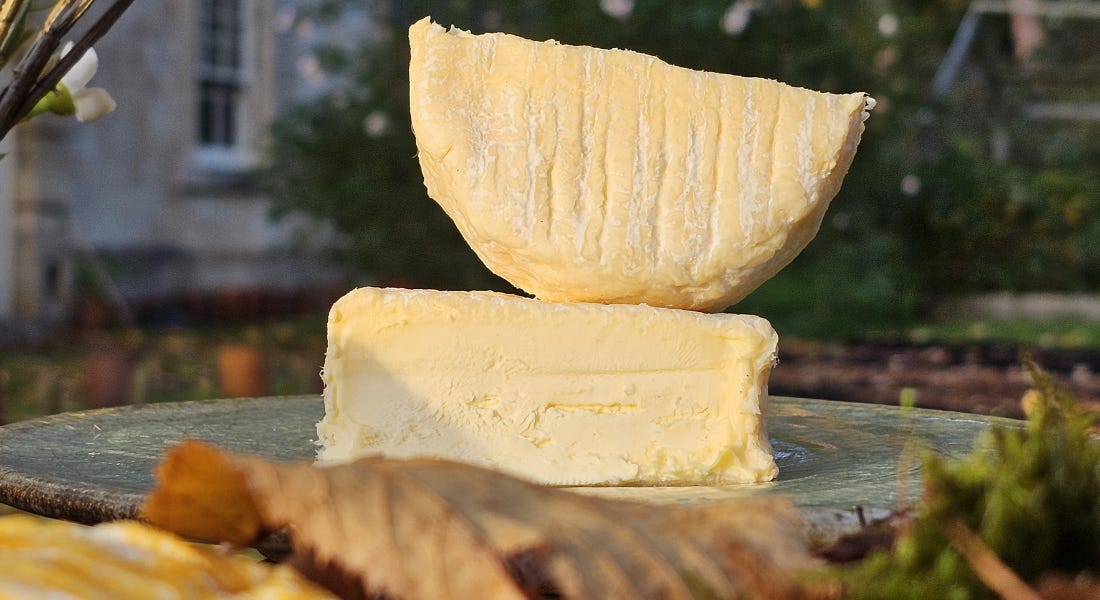
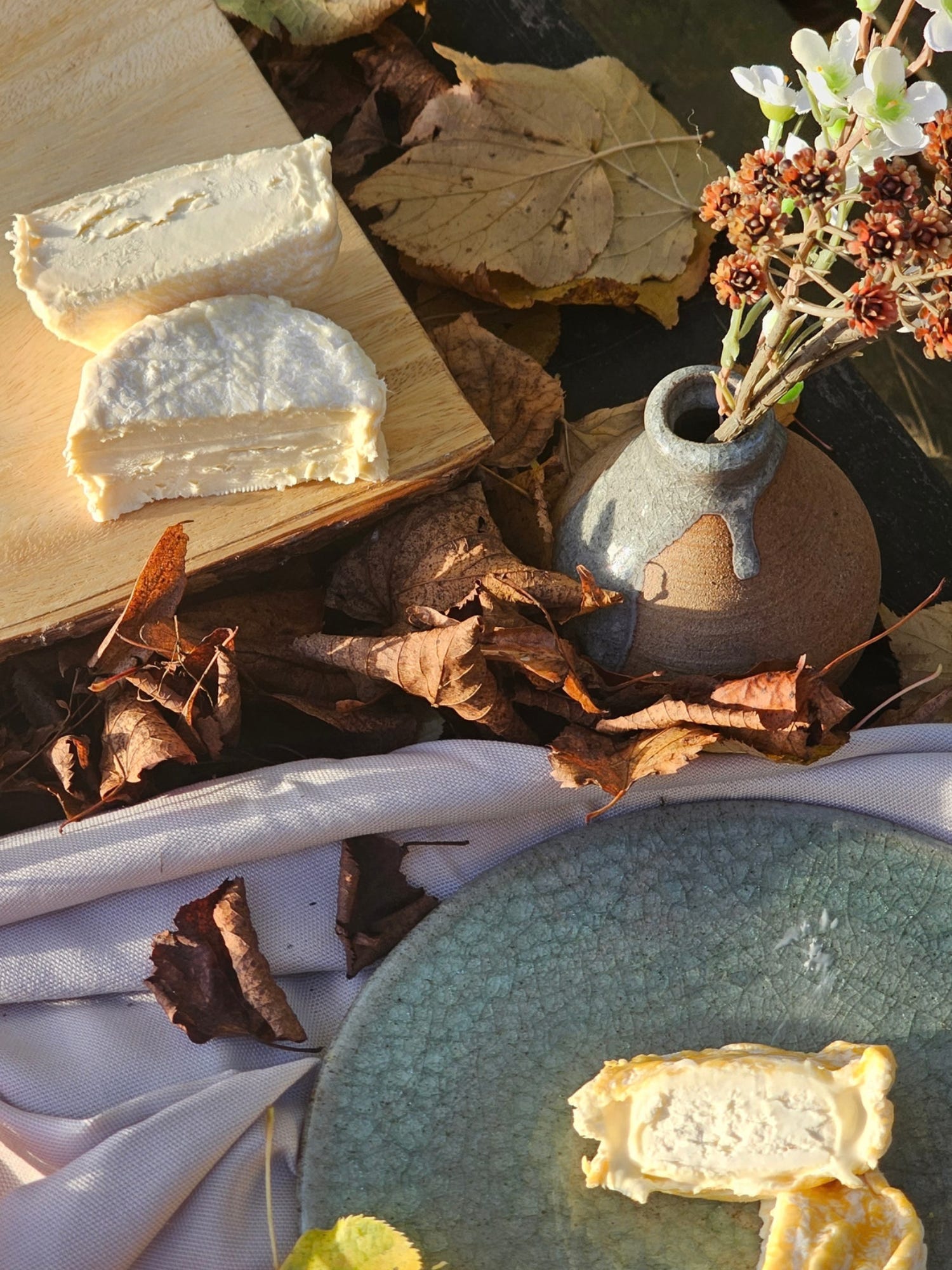
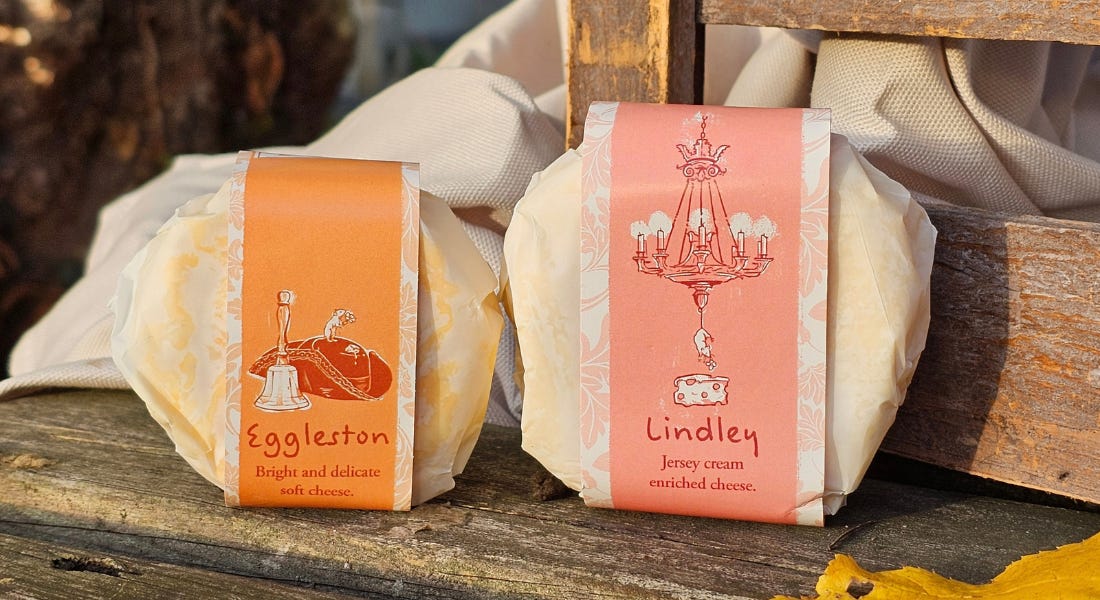
Currently, Primrose Creamery produces two cheeses. One is Lindley, which has Jersey cream from a herd in Yorkshire, and is enriched to the best point possible. ‘In France, you get cheeses like Chaource and Brillat-Savarin with a really moosey, bright creme fraiche flavour and a ridiculous, decadent texture – it’s almost like ice cream texture, and in the UK we don’t really have anything like that.’ This ended up being its ‘own beast,’ with the yeast cultures Jake used taking on a winey, bready, fruity character.
On the Welbeck Estate, the fifth Duke of Portland built underground tunnels and turned them into a ballroom – which actually ended up being a dairy. ‘They had chandeliers in the milking parlour with beautiful tiles on the floor – so on the front of our cheese label, you’ve got a chandelier with a little mouse hanging off of it,’ Jake explains. ‘But it’s named after Elizabeth Lindley, who was the woman that lived above the cows, and cared for them night and day.’
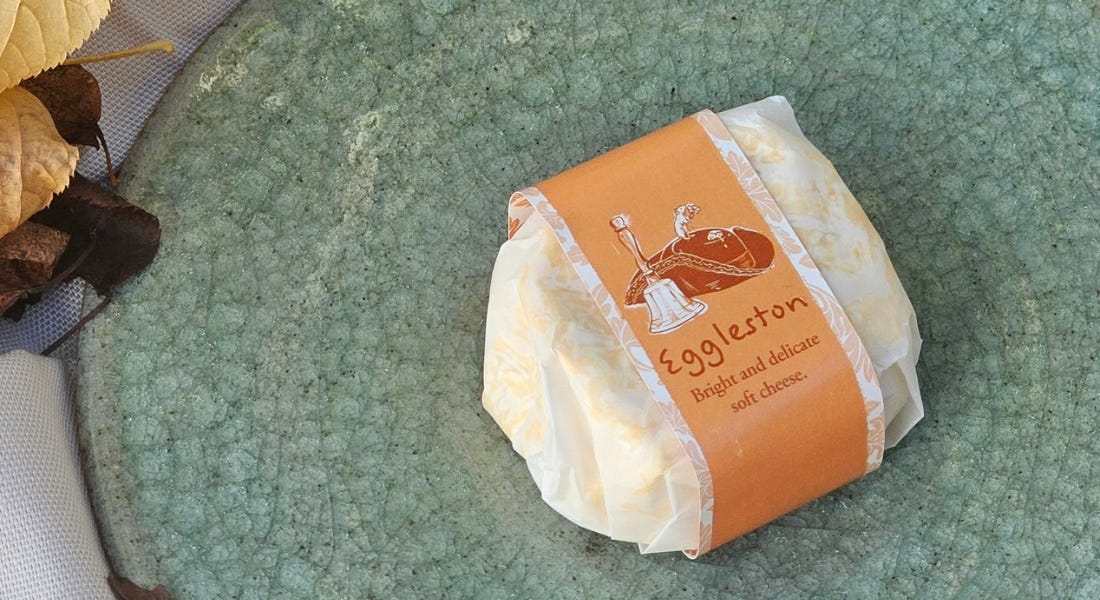
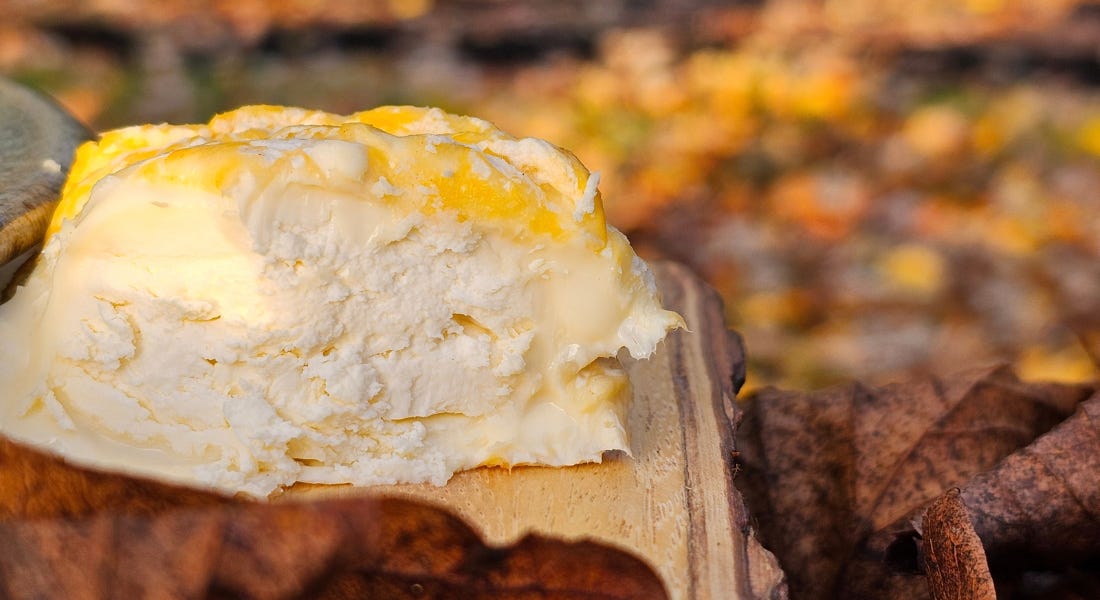
The other cheese is Eggleston – named after William Eggleston, who died in the Nottingham Cheese Riot of 1766. ‘He wasn’t even rioting – he was just trying to sell his cheese and got killed,’ Jake says. ‘I like that he died defending the cheese that he loved.’ This is a small, soft cheese with an orange, delicate rind. When young, it’s firm and fresh, with clean, bright flavours of lemon zest, crisp apple, and cultured cream. But, as it matures, the edges begin to soften, revealing a rich, spoonable layer beneath the surface.
These two very distinctive cheeses may be new to the cheese scene, but they’ve already scooped up a host of accolades. ‘Awards are crucial to get our name out there – so we did the British and Irish Cheese Awards first, with Lindley getting silver and Eggleston bronze.’ From here, they swept the Artisan Cheese Awards in Melton Mowbray. ‘We got five golds, four silvers, and three bronzes,’ Jake explains. ‘I also got this big trophy for – don’t laugh – the young cheesemaker of the year. I’m not sure what the cut-off is because I don’t describe myself as young, nor do many of the people in the room,’ he chuckles.
But for Jake, the proudest moment came from the Great Taste Awards, from which he received a bursary for Lindley enter, and paid for Eggleston. ‘When I was 18-19 years old, first getting food and drink, those stickers were like the coolest thing in the world – I would go to farm shops and spend seven quid on a cheese or a bit of butter, just because it looked cool and tasted good,’ Jake says. ‘They called in advance before they announced it, and they had done the tasting – one of the big customers wasn’t liking it, but he ended up subsequently stocking the cheese and said he just wasn’t feeling great.’
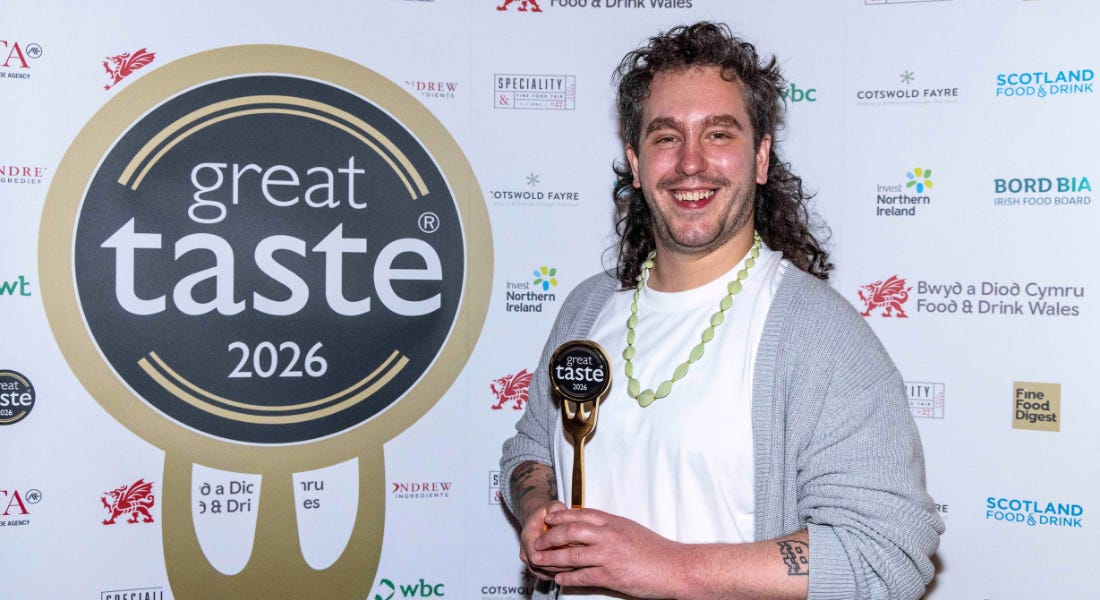
Then, 20 minutes later, he got another phone call. ‘They said we’d been given three stars for both products – and because of my history of how much I love those stickers and how much they mean to me, to get one star on one product was going to be the end goal, and it would be so special. But three?!’ he smiles.
Only 306 received the highest three-star rating in 2026. From those entries, just 33 products were selected as Great Taste Award Golden Fork nominees. In September, Primrose Creamery’s Eggleston won the Golden Fork for England (aka the most delicious product from England), while Lindley won the Great Taste Golden Fork for Outstanding Bursary Winner. Lindley and Eggleston are both available at Essen General Store in Beeston (essen-generalstore.co.uk).
If you are thinking about trying some locally made cheese, there are plenty of reasons you should choose a small producer’s makes over blocks simply from the supermarket. ‘It’s easy when you’re running a small business to go down the route of supporting small and local – which I do agree with, but I don’t think that is the reason you should give,’ Jake says. ‘The reason you should give to people buying your products is because it’s better, and I genuinely believe that – not just for our own cheese, but for pretty much every small batch cheesemaker across this country.’
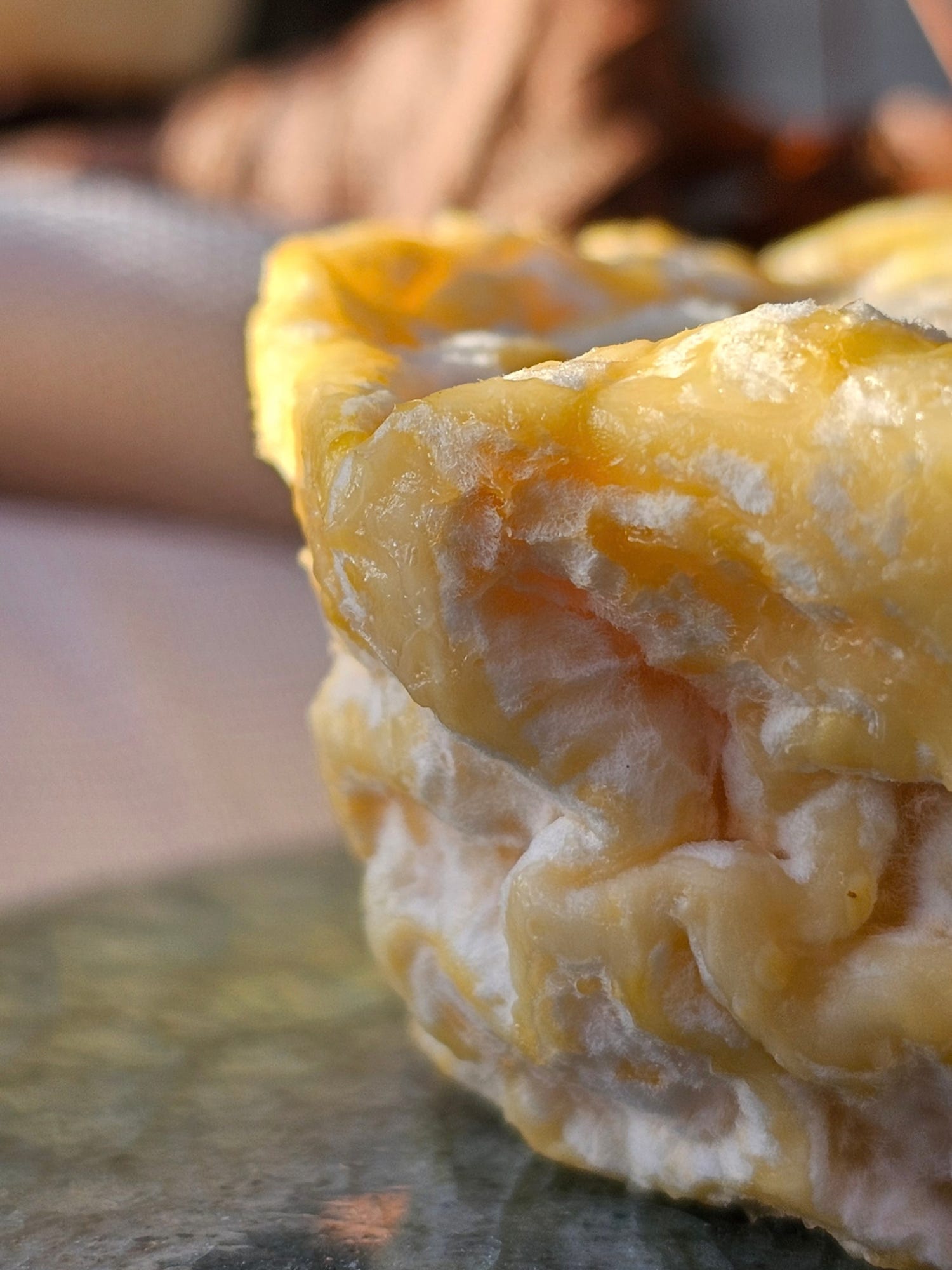
He continues, ‘Whether you get someone that has no experience of cheese or an aficionado, and put supermarket cheese next to small batch artisan cheese, they all choose the small batch cheese every time and – even with that variability – it just stands up better. I think it’s more complex and more interesting.’
In terms of the future, Primrose Creamery has just launched its own butter, as well as working on a project to bring back Colwick cheese. ‘It was made from the early 1600s through to 1993 without breaking production, and then it ceased,’ Jake explains. It was picked back up in 2011 by Belvoir Ridge Creamery, but this again ceased production in 2018 when the owners retired. ‘We’re planning on bringing that back at some point.’
It is also planning on launching The Tasting Table next year. ‘This will be four cheeses released a year that are made once, never to be made again, that are made in line with the seasons, and so we’ll release them in line with the equinoxes and solstices, and they’ll be made in a super limited quantity,’ he explains. ‘We’re also looking at local trees that grow edible leaves outside and the walled garden at the Welbeck Estate, as well as possibly looking at doing some Neapolitan-style ice cream cones next summer – and just really push the boat out.’
While Jake admits he can occasionally be guilty of chasing success, the most important thing for him is that everyday people like it and enjoy it. ‘It’s everything we want this company to be about,’ he finishes by saying. ‘We don’t want it to be pretentious – we just want it to be achievable, delicious… and nothing more than that, really.’
primrosecreamery.com
@primrosecreamery
🤳 Keep up with us on socials on Instagram and TikTok
✉️ Send stories such as press releases and feature ideas to editor@thenottsedit.com
💰 Want to feature your business in The Notts Edit? Email Eve Smallman at editor@thenottsedit.com to receive our media pack
☕ Enjoying The Notts Edit? Buy us a coffee on Ko-Fi and help fuel our words