


Organising and decluttering can be overwhelming tasks – but with the right knowledge and even expert help, these can be simple and rewarding to do.
I chatted with professional organiser and declutterer Pauline Webb about how she got into the business, ways she has helped people, and her top tips for tidying.
If having a clear-up or a clear-out is on your list of things to do, she’s shared plenty of useful information. For more features and guides, subscribe to The Notts Edit to receive our articles in your inbox for free.
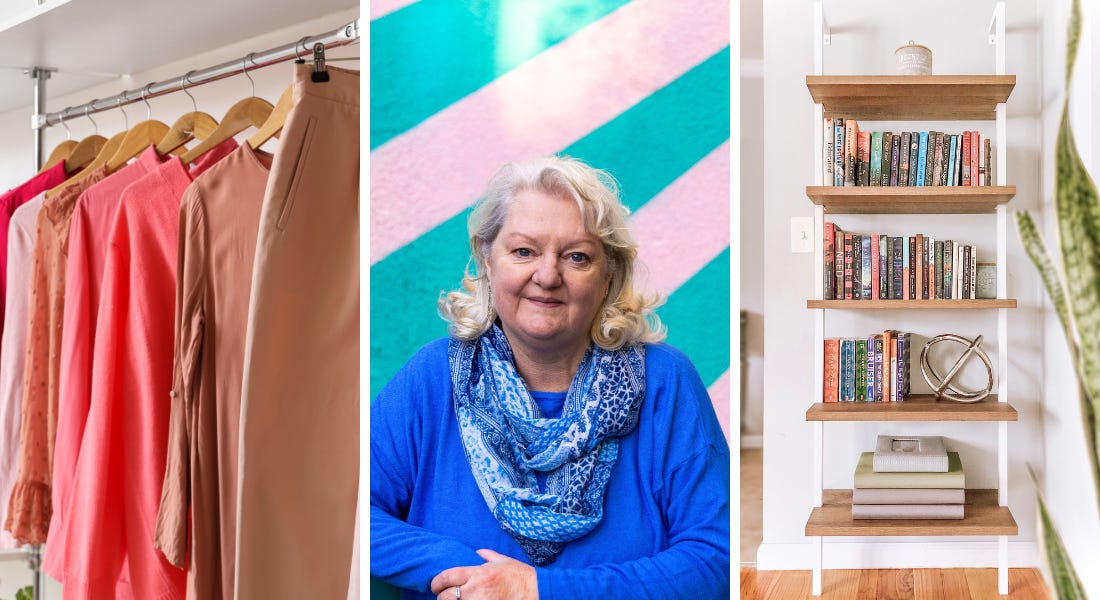
The art of organising and decluttering, according to a Sherwood-based pro
By Eve Smallman
When it comes to organising and decluttering, getting started can be one of the most difficult things. Push it to next weekend. Begin sorting. Open a drawer. Stare at an object. Reminisce for hours. Put the object back and – oh wait, it’s now time for dinner.
Someone who knows how to get started properly – and how to sort through items efficiently – is Sherwood-based expert Pauline Webb, who has over five years of experience in the business.
Pauline’s journey into organising was inspired by a trip to America, where organising and decluttering were a thing well before they were here. “Americans wear their hearts on their sleeves a lot more than we do over here, and they don’t mind talking about everything,” says Pauline. This means they have no qualms about showing the clutter they may have and asking for help, making professional organising incredibly popular there.
Coming back home and feeling inspired, Pauline looked into it here and found the Association of Professional Declutterers and Organisers (APDO, apdo.co.uk), which does training courses. “I booked on, and the rest is history.” After doing initial unpaid work to get testimonials from people, as well as working the Nottingham networking scene, she landed her first paid jobs.
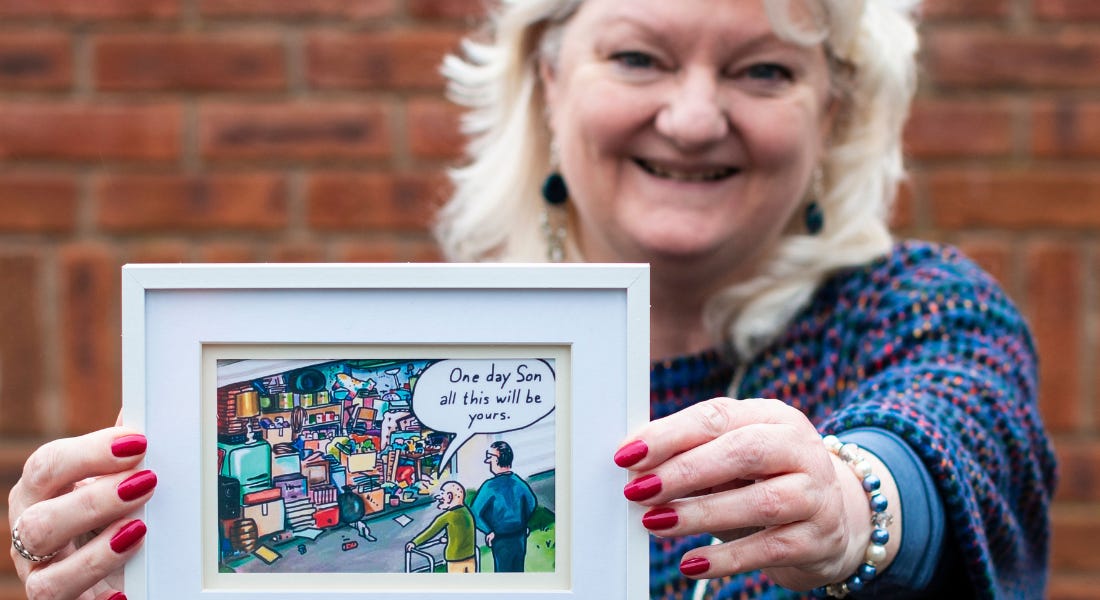
“These were from fellow business women, who were forever trying to keep on top of those jobs that you have to keep on top of, and vowing that they were going to organise and declutter, but never actually doing so because they didn’t quite know where to start,” she explains. “I think that happens with a lot of people who don’t quite know where to start with something, so they don’t.”
She soon carved out her niche, which ended up being helping people move to downsize – something she quickly realised she already had a lot of experience with. “For my birth mother in Australia, I emptied the house and put it on the market, and I did a similar thing for my adopted mum and dad,” Pauline explains. “Now that I look at people who are going through that, I feel that I can be there and be that impartial person to help them make decisions about their belongings.”
This specialism led to one of her career highlights. “I had a phone call from a young man who said if dad’s house sale went through, he’d have to move out within the next seven weeks, and he didn’t have the time to help his dad go through a lifetime’s possessions – so he found me online, and we did it in seven weeks,” Pauline tells me.

She continues, “I helped engage auctioneers and charity shop people, checked out the new place and saw the storage and room size, and we just worked through it together until it all happened on moving day.” The client was also blown away by the amount of stuff in the house. “He was opening drawers and saying, ‘I didn’t even know we had this, I’ve never seen this in my life.’”
This is known as legacy clearing. “I think it’s quite an exciting thing to do, because you get to talk to people about everything and encourage people to open up conversations and dialogues within families, which I believe is really important.”
While the process is very practical, it can also be emotional – and not just for people going through bereavement. “Many people I help are experiencing some sort of grief – it could just be health, lack of mobility, losing a partner,” she says.
Sometimes people are just experiencing a change in jobs or even their lives. “I helped a woman who had retired and had realised that most of the clothes that she used to wear to work just weren’t her anymore – she was ready to revamp all the wardrobe space in the house and make it work for who she is now.”
Having an expert eye can come in handy in numerous ways. “I’m an impartial companion, and so I don’t mind hearing all the stories when someone is holding onto the object and talking about it – it’s nice to hear them share them,” she says. Pauline always recommends finding an expert on APDO, where you can search for experts based on postcode and specialisms.
While she helps with behind the scenes work, like checking out charity shops to book work in, Pauline is also a pro at finding homes for things you just can’t take to a charity shop. “For example, this person’s late wife had a sewing box, and I went out of my way to find a home for it,” Pauline tells me. “That particular one went to a young woman who was absolutely ecstatic when she picked it up, which was incredibly rewarding.”
It’s not all about letting go. “It’s also about encouraging people to identify what’s special, bringing them out, and having them on show,” Pauline says. “It can be deciding to use the best crockery, because you’ve had it in the back of the cupboard for half a generation or more, and then actually using it every day and really enjoying it.”
Want to start decluttering and organising yourself? Pauline has a few tips for getting started. “It’s about finding some very small area to begin – find a corner of a room, a drawer, or a shelf, and just move a couple of things around and find a new home for something.”
She also recommends finding an area that’s going to have the biggest impact on your daily life. “It might be where you walk in the door in the hallway, and it is just full of coats, boots, shoes, bags – it’s important to tackle something that’s going to make a real difference to you, so when you’ve done it, walking in feels so much better and you want to try and keep it like that.”
Finding the right homes for items is important. “I used to keep my laundry bag in the cupboard above the washing machine, and for years and years, this was downstairs,” Pauline explains. “I realised that my laundry bag needs to be with my clothes, and then if I take something off that’s delicate, I can put it straight in the bag, and it will find its way into the washing machine in its bag – so I haven’t got to panic if my husband’s going to put a wash on.”
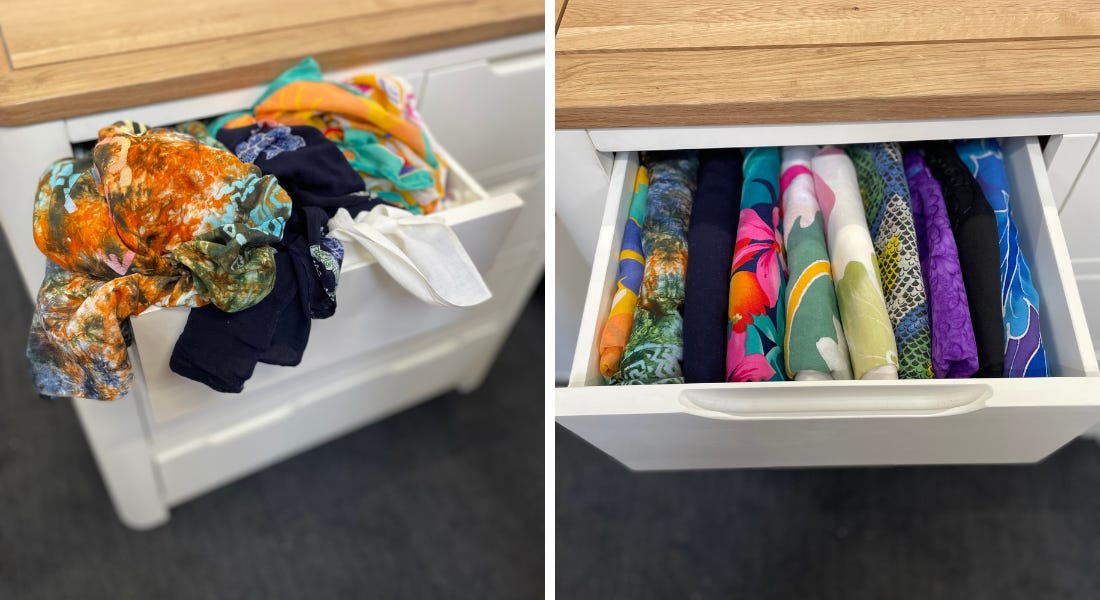
Pauline also recommends looking out for duplicates. “Stationery is a good example – you might end up finding rolls of tape in different parts of the house, so create a space for when you want tape, that’s where you go, and it goes back – and then you also won’t need to go shopping again for it because you can’t find it.”
And, most importantly of all, keep the end result in mind. “Visualise your home, and think what you’d like it to look like and how you’d like it to be,” Pauline finishes by saying.
Whether you’re looking to tidy up a certain area or a home, either by yourself or with help, decluttering and organising can be a life-changing experience – all you need to do is get started.
🤳 Keep up with us on socials on Instagram and TikTok
✉️ Send stories such as press releases and feature ideas to editor@thenottsedit.com
💰 Want to feature your business in The Notts Edit? Email Eve Smallman at editor@thenottsedit.com to receive our media pack
☕ Enjoying The Notts Edit? Buy us a coffee on Ko-Fi and help fuel our words