


Nottingham has a long history of queer people, places and stories that span decades, even centuries. Many of the everyday buildings we walk past hold memories and queer connections we may never know – but some, thankfully, we do.
Queer history is seldom written down; it’s passed from person to person, which is how so much of it gets lost over time. As a queer historian, CJ DeBarra has been searching for Nottingham’s hidden stories and buildings by finding evidence and oral histories from 1770 to 2025. Ahead of Notts Pride (July 25, nottspride.co.uk), they have made a list of the seven places you should know about.
Finding out about our city and county’s history is always an excellent activity to do in Nottingham. For more guides and features, subscribe to receive our articles in your inbox for free.
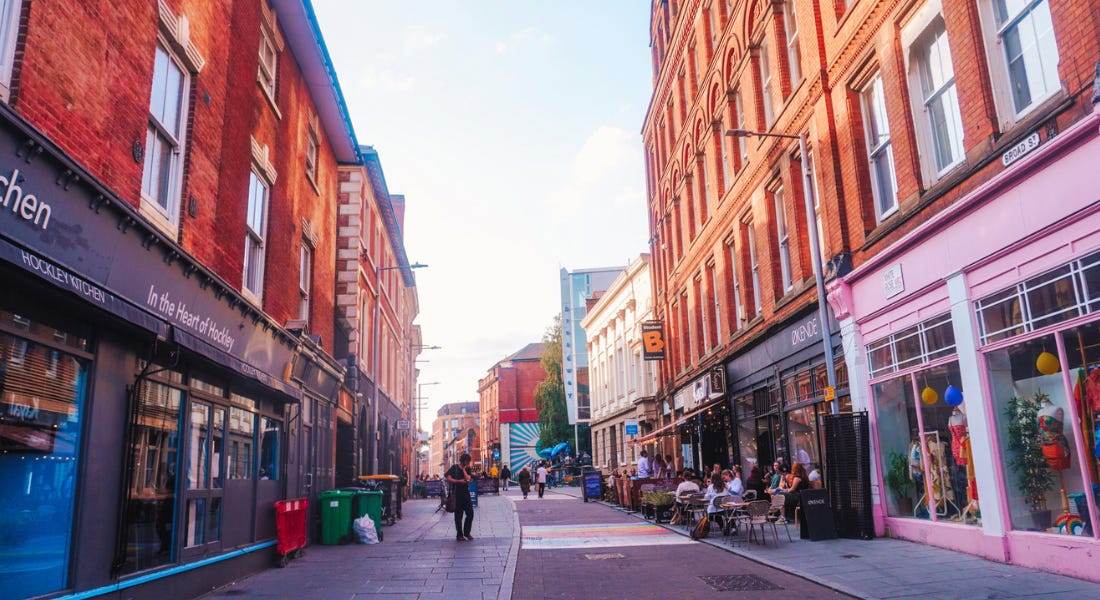
7 LGBT+ places from Nottingham’s history that shaped the city and county
By CJ DeBarra (@nottsqueerhistoryarchive)
1. The Napier Pub on Union Road (now student accommodation)
The Napier was the pub to go to if you were a lesbian in the 1950s and 1960s. It was not a dedicated space, but Nora Osbourne and her husband kept a backroom open for their queer clients. The pub was a real mix of St. Ann’s locals and queer people, complete with a piano which often prompted a raucous sing-along late in the evening.
The pub was also known for its fights – mainly among the women! Often, a punch-up would happen when the ‘butch femme’ rules were not observed. This was very much the style of the time, which faded out into the 1970s amid the feminist movement.
The Napier was demolished during the demolition of St. Ann’s in the late 1960s. It was one of four pubs that welcomed queer drinkers in the area – today, only the Forester’s Arms (New Foresters) remains.
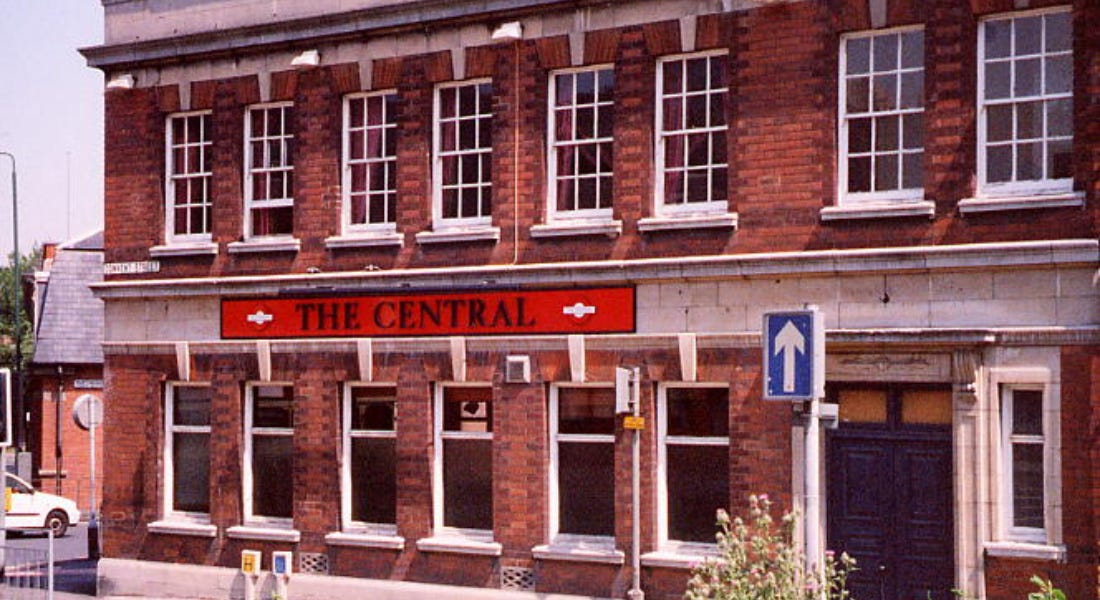
2. Central Tavern on 310 Huntingdon Street
It’s hard to believe that this boarded-up pub was once one of the titans of Nottingham’s queer scene – but it was. It was originally known as Central Tavern due to its proximity to Central Market. Its queer life, that we know, started in the 1980s when Hilda Bradley opened it as ‘Gatsby’s’ with her sons. Hilda ran the pub with precision, as she had the Dog and Partridge on Parliament Street. Her sons were often spotted serving behind the bar and in their own venues: Nero’s on St. James Street, The George and Dragon on Angel Row, the Old Elm Tree in Hoveringham, and briefly, a pop-up night at Madison’s on Goldsmith Street.
They quite literally ruled the scene.
After Hilda let the pub go, it never really regained its hold on the scene: it was Central in the early 2000s, then Niche, New Gatsby’s and also Intrigue. Finally, in 2019, it closed for good after a violent incident that led to the revocation of its license.
3. The White Hart, Mansfield
The White Hart Hotel in Mansfield began holding exclusively gay discos on Friday and Saturday nights in the upstairs function room. It was run by Roy and Jean, a straight couple who had previously run the Belle Vue pub on Stockwell Gate.
Many of the regulars would start drinking in a corner of the nearby Red Lion pub, which often held drag shows before gravitating to the Belle Vue. Eventually, the ex-Shipstone pub was demolished to make way for the Ring Road in 1981. When the pub was closed, the couple promised their queer regulars they would create a space for them in the new location.
The club night was referred to as ‘The Hart’, or ‘Dragon’s Den’ after Jean, who was described as having a ‘fiery temperament.’ She was said to breathe fire on anyone who offended her LGBT+ patrons. The hotel hosted drag nights with queens such as Rita Box and strippers, both male and female.
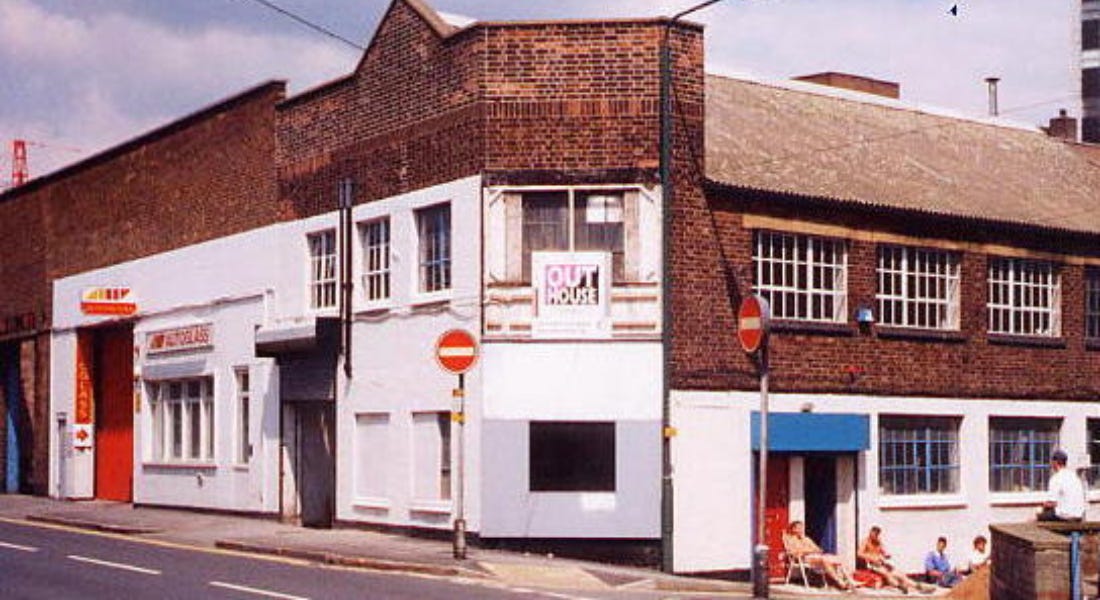
4. The Outhouse on Lennox Street
The former Outhouse Project had a dream that began in the late 1970s. An ever-changing group of volunteers wanted to build a centre that could serve the LGBT+ community. This would be everything from Nottingham Switchboard to the health services to a cafe and crèche. While many venues were scouted, one of the corners of Lennox Street was promising. After a successful funding bid, the building was bought, and work began to renovate it.
Sadly, in 2005, the project stalled, as it was realised there wasn’t enough money to finish it. It was sold, and the proceeds were donated to other LGBT+ charities. However, without the Outhouse team, Nottingham Pride would not have been revived after there were no celebrations in 2001 and 2002.
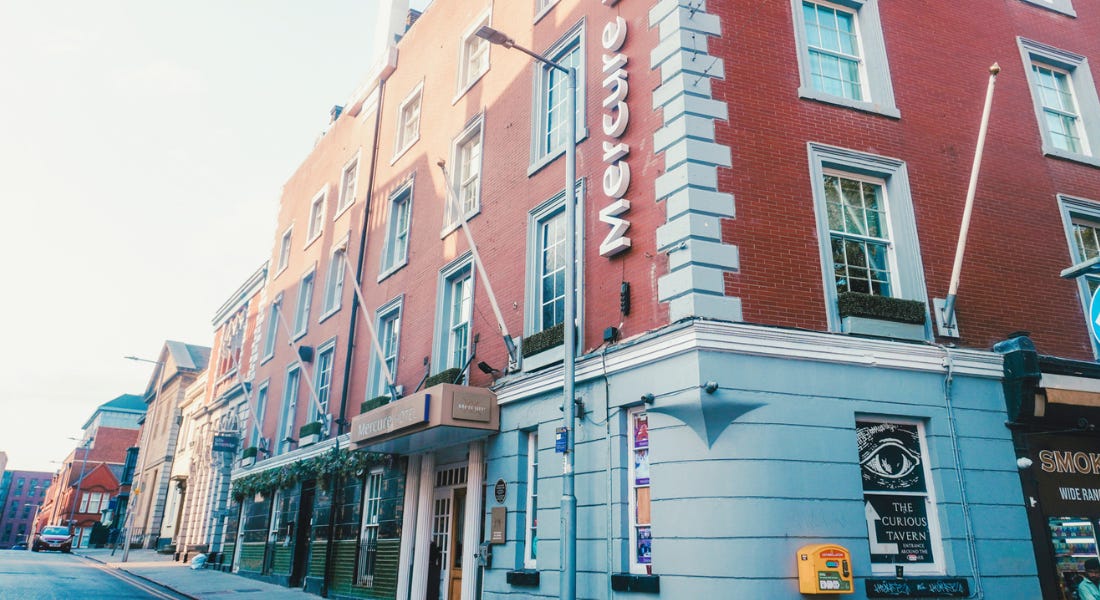
5. The George Hotel on George Street
In the 1950s and 1960s, queer men often frequented hotel bars as they were quieter than their high street counterparts. Also, many of them ran a gentlemen’s-only bar for hours that made it easier for men, given that homosexuality was still illegal. The George had a bar called the Dickens Bar, which was an upper-class establishment, so named because Charles Dickens had stayed in the hotel, and the bar displayed a cheque from him.
Decades later, the hotel, then called The Comfort Hotel, hosted the Lezzie Love Ball as part of Pride 2003. There was a full entertainment line-up, although the staff may not have been ready for the ‘Full Mufty’ performance… exactly what it sounds like.
6. The Manor Hotel. West Bridgford
The Manor Hotel in West Bridgford began hosting occasional lesbian disco nights. It is unclear when it was built, but the earliest mentions of the ‘social club’ date back to 1933, when it was known for its pool tables. Seemingly, nothing had changed in the 1980s, when it began to open for lesbian discos. It is unclear when the Manor Disco ceased operations, but the venue was demolished in 2005.
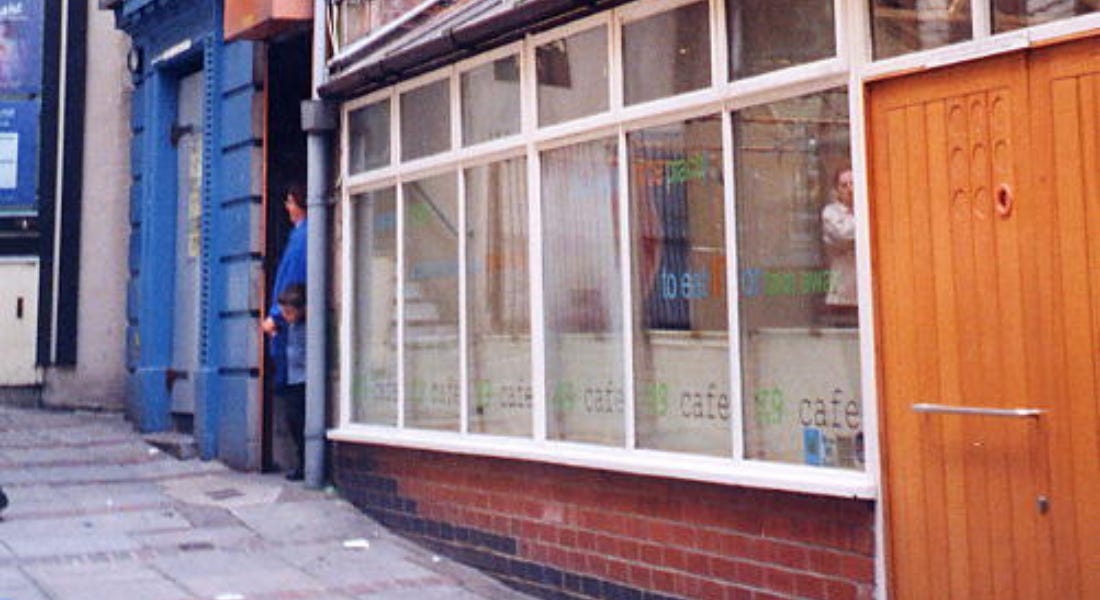
7. Kitsch / Casablanca on Greyhound Street
Incredibly, Greyhound Street wasn’t always a toilet! Casablanca came first, opening in 1986, but the club never really took off. It was redesigned and reopened as Kitsch in 1995. Kitsch was small but had a strong following among house music fans. It also hosted club nights after Pride buses returned to Nottingham from London in the early hours, and fundraisers for support services like the Gai Project.
It eventually faded from the scene in 1996 after an undercover documentary hinted at the drug scene within the club. It finally became a toilet in the late 2000s after the bathroom at Market Square was removed during renovation.
CJ DeBarra is the author of the Queer Nottingham books. fiveleavesbookshop.co.uk
🤳 Keep up with us on socials on Instagram and TikTok
✉️ Send stories such as press releases and feature ideas to editor@thenottsedit.com
💰 Want to feature your business in The Notts Edit? Email Eve Smallman at editor@thenottsedit.com for a chat
☕ Enjoying The Notts Edit? Buy us a coffee on Ko-Fi and help fuel our words